
The Convention on International Trade in Endangered Species of Wild Fauna and Flora (CITES) is an international agreement between Governments. As of November 2015, there are 181 member Parties, including 180 states and the European Union. The aim of CITES is to ensure that international trade in specimens of wild animals and plants does not threaten their survival. CITES works by subjecting international trade in specimens of selected species to certain controls. These require that all import, export, re-export and introduction from the sea of species covered by the Convention has been authorized through a licensing system.

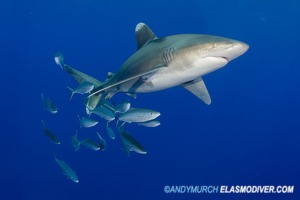
The Oceanic Whitetip Shark (Carcharhinus longimanus) is listed on CITES Appendix II (credit: Andy Murch)
Widespread information about the endangered status of many prominent species, such as the tiger and elephants, might make the need for such a convention seem obvious. But at the time when the ideas for CITES were first formed, in the 1960s, international discussion of the regulation of wildlife trade for conservation purposes was something relatively new. With hindsight, the need for CITES is clear. Annually, international wildlife trade is estimated to be worth billions of dollars and to include hundreds of millions of plant and animal specimens. The trade is diverse, ranging from live animals and plants to a vast array of wildlife products derived from them, including food products, exotic leather goods, wooden musical instruments, timber, tourist curios and medicines. Levels of exploitation of some animal and plant species are high and the trade in them, together with other factors, such as habitat loss, is capable of heavily depleting their populations and even bringing some species close to extinction. Many wildlife species in trade are not endangered, but the existence of an agreement to ensure the sustainability of the trade is important in order to safeguard these resources for the future.
The species covered by CITES are listed in three Appendices, according to the degree of protection they need:
- Appendix I includes species threatened with extinction. Trade in specimens of these species is permitted only in exceptional circumstances.
- Appendix II includes species not necessarily threatened with extinction, but in which trade must be controlled in order to avoid utilization incompatible with their survival.
- Appendix III contains species that are protected in at least one country, which has asked other CITES Parties for assistance in controlling the trade.
Appendix I
- Oceanic Whitetip Shark (Carcharhinus longimanus, 2025)
- Whale Shark (Rhincodon typus, 2025)
- All species of sawfishes (family Pristidae, 2007 and 2013)
- All species of mobulida (family Mobulidae, 2025)
Appendix II
- Basking Shark (Cetorhinus maximus, 2003)
- White Shark (Carcharodon carcharias, 2005)
- Porbeagle Shark (Lamna nasus, 2014)
- Thresher Sharks (Alopias spp., 2017)
- Shortfin Mako (Isurus oxyrinchus, 2019)
- Longfin Mako (Isurus paucus, 2019)
- Tope (Galeorhinus galeus, 2025)
- All species of giant guitarfishes (Glaucostegus spp., 2019)
- All species of wedgefishes (family Rhinidae, 2019)
- All species of guitarfishes (family Rhinobatidae, 2023)
- All species of requiem sharks (family Carcharhinidae, 2014, 2017, and 2023)
- All species of hammerheads (family Sphyrnidae, 2014 and 2023)
- All species of freshwater stingrays (Potamotrygon spp., 2023) – except for populations from Brazil
- All species of gulper sharks (family Centrophoridae 2025)
- Add “A zero annual export quota for wild-taken specimens traded for commercial purposes” annotation for Giant Guitarfish (Glaucostegus spp.,2025)
- Add “A zero annual export quota for wild-taken specimens traded for commercial purposes” annotation for Wedgefishes (family Rhinidae spp.,2025)
Appendix III
- Manzana Ray (Paratrygon aiereba, 2017) – in Bolivia (Plurinational State of), Brazil, Ecuador, Peru, Venezuela (Bolivarian Republic of)
- Potamotrygon spp. (2022) – Brazil populations
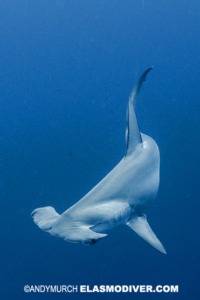
The Scalloped Hammerhead (Sphyrna lewini) is listed on CITES Appendix II (Photo credit: Andy Murch)