Widespread concern over the lack of management of shark fisheries and the impact that expanding catches may have on shark populations led to the adoption and endorsement of the Food and Agriculture Organization of the United Nations (FAO) International Plan of Action for the Conservation and Management of Sharks (IPOA–SHARKS) in 1999. This plan is aimed at ensuring the conservation and management of sharks and their long-term sustainable use, with particular emphasis on improving species-specific catch and landings data collection, and the monitoring and management of shark fisheries. The IPOA–SHARKS recommends, inter alia, that all States contributing to fishing mortality on an elasmobranch species or stock should participate in its management, and should develop a National Plan of Action for the Conservation and Management of Sharks (NPOA-SHARKS) before 2001.
-
Spatial distribution of the direct management measures we considered finalized up to the year 2012 to correspond with the FAO landings data. (c) The percentage of the ten objectives of sustainable fishing that were met. Source: Davidson et al. 2015
- Regional Fishery Management Organizations (RFMOs) as recognized by the Food and Agriculture Organization of the United Nations (FAO)
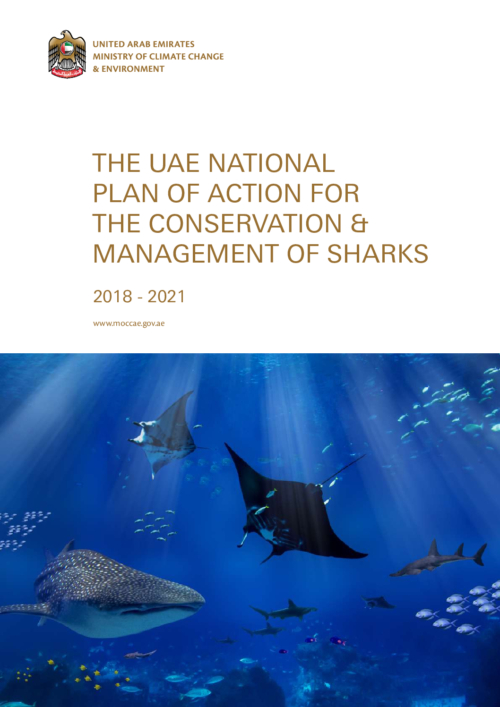
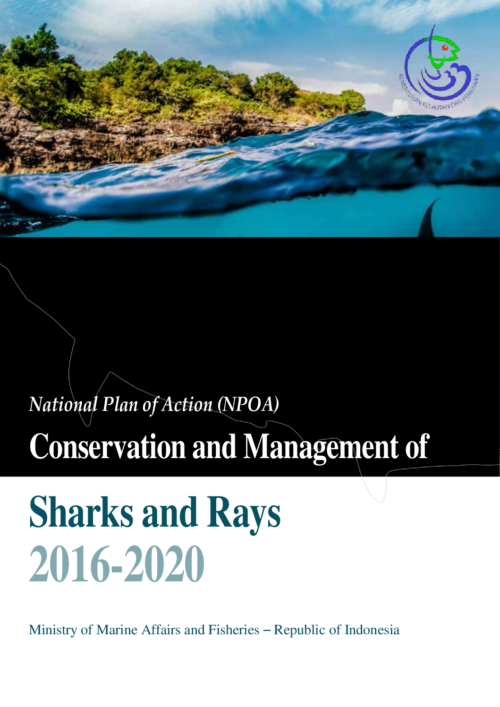
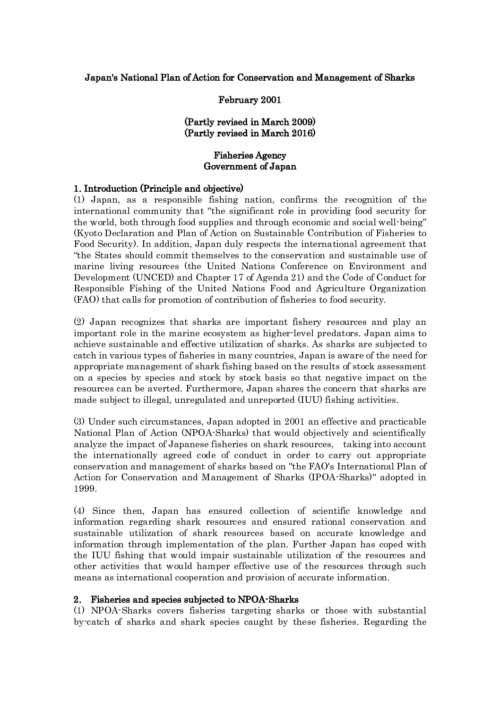
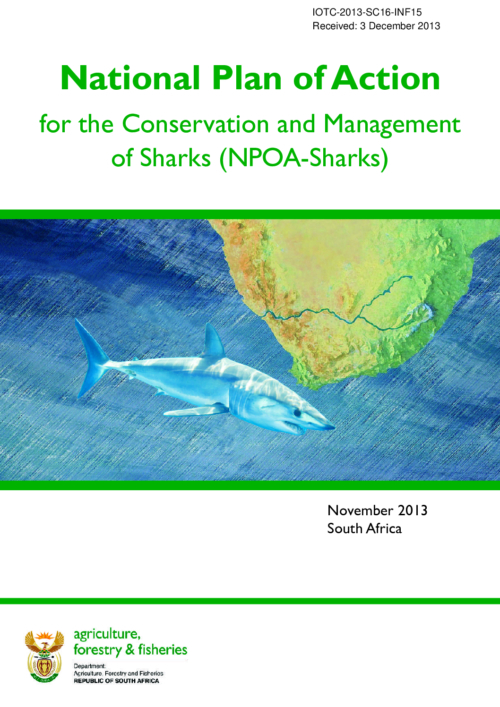
A total of 31 national and 6 regional NPOA-SHARKS that have been produced. As of early 2016, these regional and national plans included the United States (2001), Japan (2001, revised 2009), the Mediterranean Sea (2003), Namibia (2003), West Africa (2003), Australia (2004, revised 2012), Taiwan (2004), Mexico (2004), the United Kingdom (2004), Belize (2005), Brazil (2005), Honduras (2005), Chile (2006), Ecuador (2006), Malaysia (2006, updated 2014), Thailand (2006), Canada (2007), Senegal (2007), Seychelles (2007), New Zealand (2008), South Pacific (2008), Uruguay (2008), Argentina (2009), the European Union (2009), the Philippines (2009), Venezuela (2009), Colombia (2010), Indonesia (2010), Bay of Bengal (2011), Central America (2011), Korea (2011), Sri Lanka (2013), South Africa (2013), Tonga (2013), Vanuatu (2014), Cuba (2015), and the Maldives (2015). NPOA-SHARKS are currently underway for India and Myanmar. Some of these national and regional plans are available in the FAO document repository. In a recent analysis of these NPOA-SHARKS, 64% of landings came from countries that had completed NPOA-SHARKS, but only 9% of the global catch comes from countries with comprehensive NPOA-SHARKS (those countries that met the objectives of sustainable fishing; Davidson et al. 2015).