* The term ‘shark’ refers to all species of sharks, rays, and chimaeras.
Written by Rima Jabado
What is the IUCN Red List of Threatened Species?
The International Union for Conservation of Nature (IUCN) Red List of Threatened Species is the world’s most comprehensive global information source on the conservation status of plant, fungi, and animal species. Each species is assessed against the IUCN Red List Categories and Criteria to determine their relative extinction risk. The aim is to identify which species face an elevated risk of extinction (i.e., most likely to become extinct in the near future) and use this information to inform and catalyze biodiversity conservation action.
The IUCN Red List is not a list of species that are high priorities for conservation action. While extinction risk is an important factor to consider when determining which species to invest in, establishing conservation priorities ultimately depends on other important factors, including financial, cultural, logistical, biological, ethical, and social considerations, to ensure conservation actions can be maximized.
The IUCN Red List does not have a legal status. A species assessment does not imply that a species should be protected or is protected in a country or region. In fact, most countries have their own national lists to assess and prioritize the conservation of species that may then lead to legislative protection.
What does each IUCN Red List category mean?
The IUCN Red List Categories and Criteria are intended to be an easily and widely understood system for classifying species at high risk of global extinction. All of the world’s species fall into one of nine IUCN Red List Categories based on five criteria (A-E) linked to population trend, population size, and geographic range (Figure 1). Each criterion has a set of quantitative thresholds that determine which (if any) of the threatened categories (Critically Endangered, Endangered, or Vulnerable) a species qualifies for. If none of the thresholds are met, then it must be decided which of the Red List Categories is appropriate for that species.
IUCN Red List Categories are official terms and, when cited, should be treated as proper nouns and capitalized without quotation marks (e.g., Data Deficient).
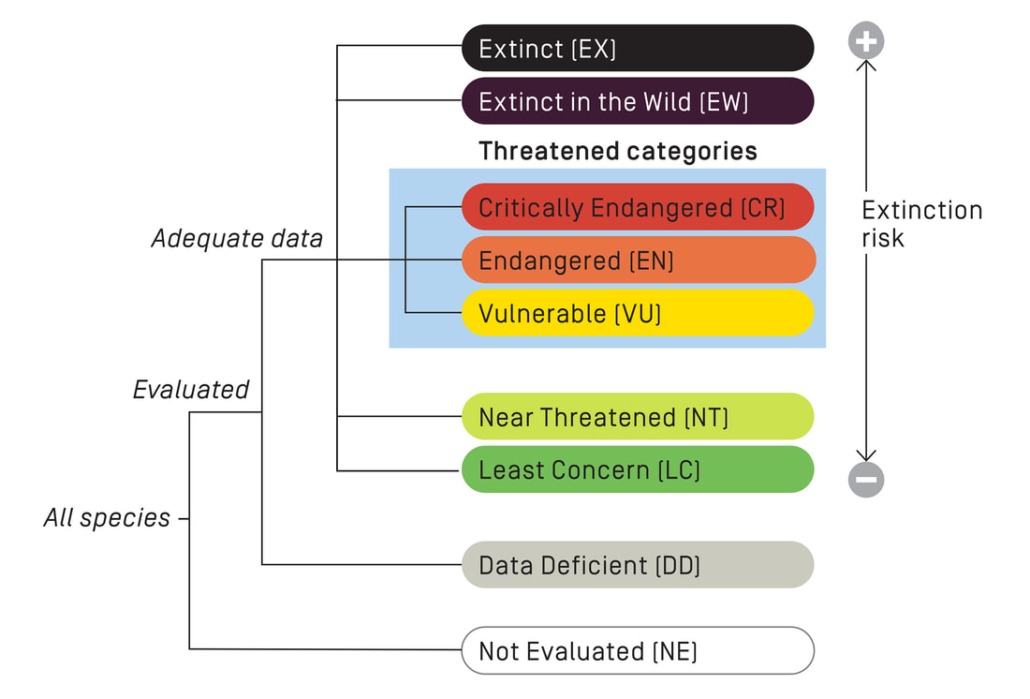
Figure 1: The IUCN Red List of Threatened Categories in increasing order of risk from bottom to top (Source: IUCN, 2012).
Extinction risk and sharks
To date, extinction risk has been evaluated for more than 175,900 species, around 6% of the world’s known species. The majority of the world’s species currently sit in the Not Evaluated (NE) category and these are not listed on the IUCN Red List.
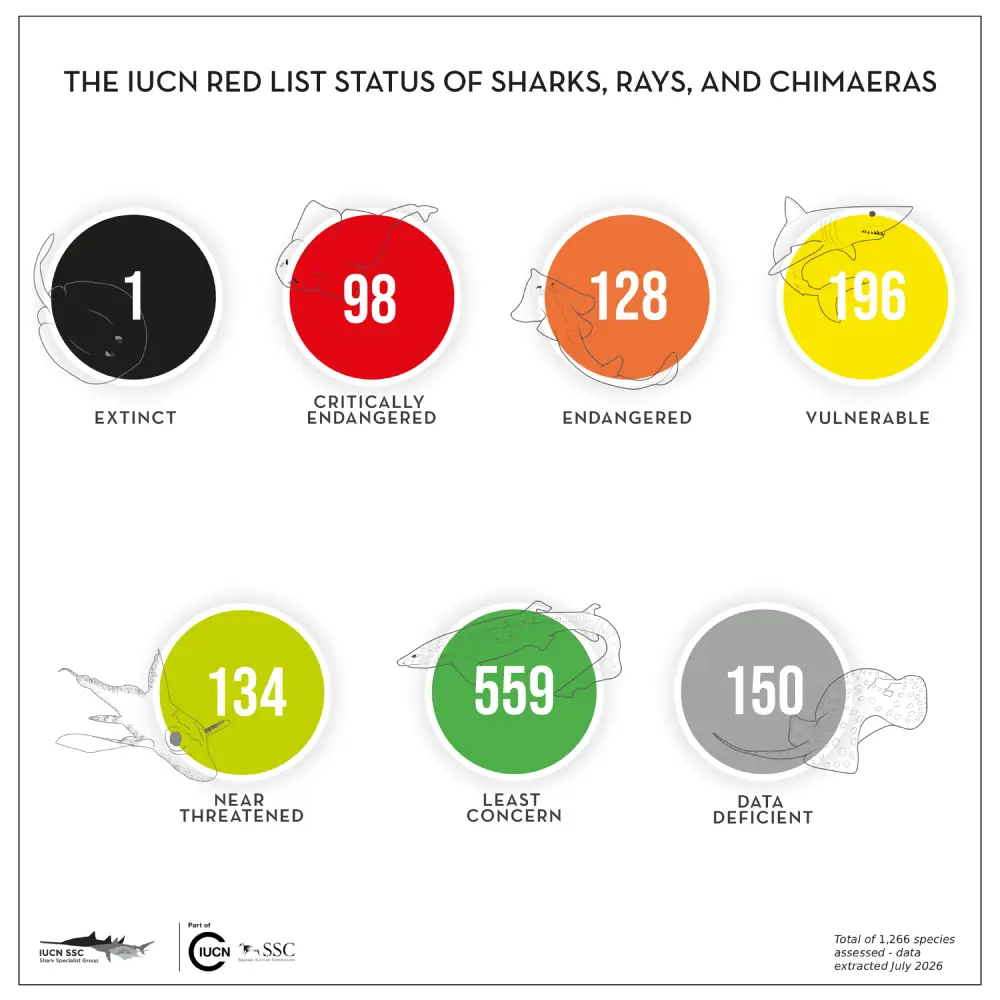
The IUCN Species Survival Commission (SSC) Shark Specialist Group (SSG) is responsible for the assessment of sharks for the IUCN Red List. By 2026, almost all known sharks (~1,300 species) have been assessed using the IUCN Red List Categories and Criteria. These assessments have been completed at the global level, that is, for the species’ entire global range and population. Additionally, some species have also been assessed at the sub-global level, for example a specific region (e.g., Europe), country, or subpopulation (e.g., some species like the Largetooth Sawfish (Pristis pristis) has a global assessment and separate assessments for each of its four subpopulations).
The IUCN Red List is published online at least twice a year. Anyone looking to understand the status of sharks should regularly consult this resource since the status of individual species may change as they are reassessed.
If a species is not listed on the IUCN Red List website, it means that the species sits in the Not Evaluated category and that an assessment has yet to be completed.