To provide the best experiences, we use technologies like cookies to store and/or access device information. Consenting to these technologies will allow us to process data such as browsing behavior or unique IDs on this site. Not consenting or withdrawing consent, may adversely affect certain features and functions.
The technical storage or access is strictly necessary for the legitimate purpose of enabling the use of a specific service explicitly requested by the subscriber or user, or for the sole purpose of carrying out the transmission of a communication over an electronic communications network.
The technical storage or access is necessary for the legitimate purpose of storing preferences that are not requested by the subscriber or user.
The technical storage or access that is used exclusively for statistical purposes.
The technical storage or access that is used exclusively for anonymous statistical purposes. Without a subpoena, voluntary compliance on the part of your Internet Service Provider, or additional records from a third party, information stored or retrieved for this purpose alone cannot usually be used to identify you.
The technical storage or access is required to create user profiles to send advertising, or to track the user on a website or across several websites for similar marketing purposes.
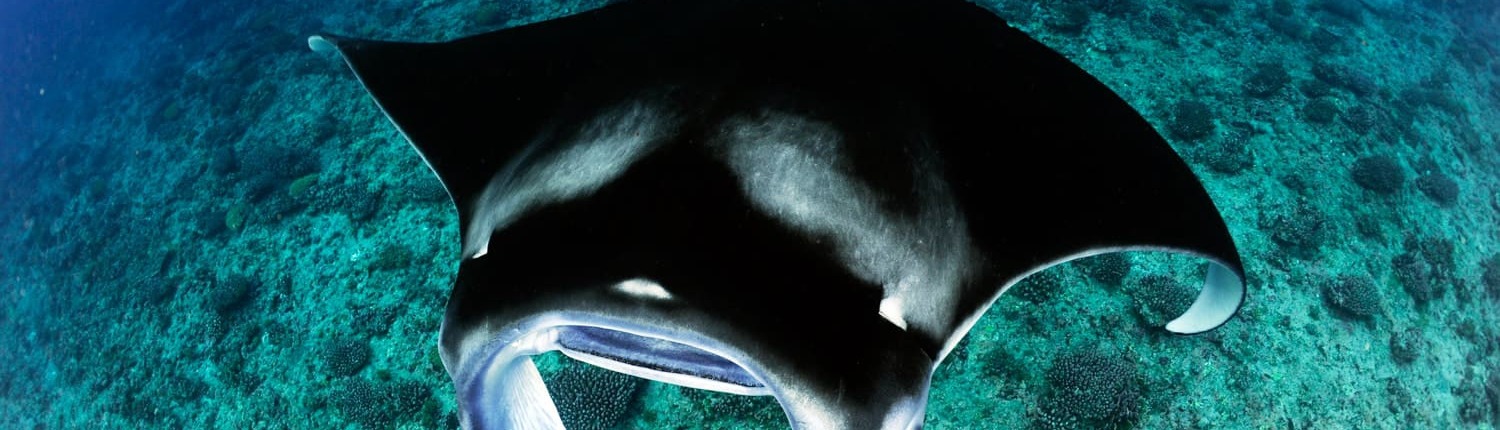


Important Shark and Ray Areas – Selection Criteria
Important Shark and Ray Areas (ISRA), News, PressThe identification of ISRAs is achieved through the application of scientifically based criteria. The ISRA Criteria were developed to provide a framework to objectively identify areas of importance to sharks, crucial for their persistence and, where required, recovery.
Available in: EN and ES
Important Shark and Ray Areas – Informative Brochure
Important Shark and Ray Areas (ISRA), News, PressThe IUCN Species Survival Commission Shark Specialist Group, with support from the IUCN Global Marine and Polar Programme and the IUCN Task Force on Marine Mammal Protected Areas, is engaged in an effort to develop an expert-driven innovative approach to ensure that discrete portions of habitats, critical to shark species — Important Shark and Ray Areas (ISRA) — are delineated and used in various place-based conservation and management initiatives across the world’s ocean.
Sawfish face global extinction unless overfishing is curbed
News, PressSawfish have disappeared from half of the world’s coastal waters and the distinctive shark-like rays face complete extinction due to overfishing, according to a new study by Simon Fraser University researchers, published in Science Advances.
Oceanic Sharks and Rays Face Unprecedented Extinction Risk from Overfishing
News, PressGround-breaking New Study Finds Global Abundance Down 71% and 77% of species threatened
A Special Group of Rays Are Now World’s Most Threatened Marine Fish
IUCN Red List of Threatened Species, News, PressGiant guitarfishes and wedgefishes, collectively called Rhino Rays, are now the world’s most threatened marine fish, based on new Red List assessments released today by the International Union for the Conservation of Nature (IUCN) Shark Specialist Group (SSG). All but one of the 16 warm-water, shark-like ray species are assessed as Critically Endangered due primarily to overfishing for meat and fins.
Shark Overfishing Reflected in Updated IUCN Red List
IUCN Red List of Threatened Species, News, PressThe Shark Specialist Group (SSG) of the International Union for the Conservation of Nature (IUCN) today released updated Red List Assessments for 58 species of sharks and rays, 17 of which were classified as threatened with extinction. The results are part of a global project to assess population trends based on a series of expert workshops, the first of which focused on Australian species as well as oceanic species found worldwide.
Saving sharks with trees: researchers aim to save key branches of shark and ray tree of life
News, PressNew study identifies conservation priorities based on evolutionary history and biogeography. To shine light on and conserve rare shark, ray, and chimaera species (chondrichthyans), SFU researchers have developed a fully-resolved family tree and ranked every species according to the unique evolutionary history they account for.
Over half of the Arabian Seas Region’s sharks, rays, and chimaeras are at risk of extinction
News, PressResults from the 2017 IUCN Regional Red List assessment of 153 species of chondrichthyan fishes (sharks, rays, and chimaeras) indicate the Arabian Sea and adjacent waters are home to some of the most threatened chondrichthyan populations in the world.
Can sharks be fished sustainably? Yes (but it’s going to take work)
News, PressAngelsharks in the Canary Islands – The last hope for this Critically Endangered shark.
News, PressThe last populations of the iconic Angelshark Squatina squatina can now only be seen in the Canary Islands. Once found along the coast of the Northeast Atlantic Ocean and Mediterranean Sea (from Scandinavia to northwest Africa), this species is now Critically Endangered (as assessed by the IUCN Red List of Threatened Species) and has been lost from much of its previous distribution.