259 important shark, ray, and chimaera habitats mapped across North America and the Caribbean
September 24, 2026
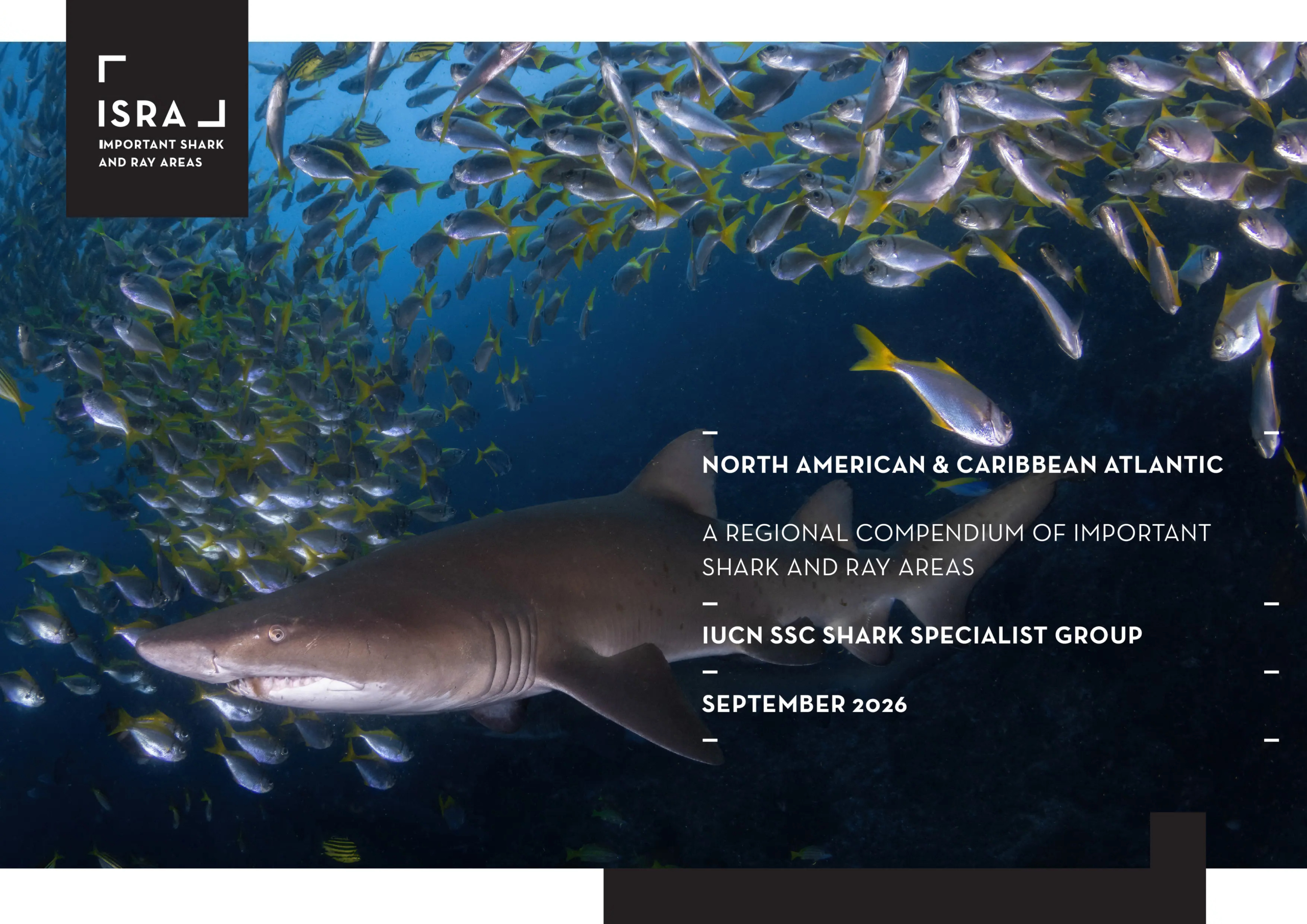
Dubai, United Arab Emirates. September 24, 2026. Scientists have identified 259 Important Shark and Ray Areas (ISRAs) across North American and Caribbean waters, revealing an extraordinary network of habitats used by sharks, rays, and chimaeras to move, reproduce, feed and gather.
The latest update to the global Important Shark and Ray Areas eAtlas adds 191 ISRAs and 39 Areas of Interest in the North American & Caribbean Atlantic and 68 ISRAs and 12 Areas of Interest for the North American Pacific, providing the most comprehensive spatial picture yet of important shark, ray, and chimaera habitats across the continent’s Atlantic, Caribbean and Pacific waters.
These results are particularly striking for the scale at which sharks, rays, and chimaeras use these waters. More than 40 areas were identified because of their importance for movement, reflecting decades of tracking and monitoring research showing how sharks and rays connect coastal habitats, cross national boundaries and travel through the open ocean. At the same time, numerous areas across the Caribbean were identified because sharks and rays use them repeatedly for reproduction and aggregation, highlighting the importance of relatively small island, coastal and shallow-water habitats to the persistence of populations.
“What these maps show is that shark, ray, and chimaera conservation has to operate at several scales at once,” said Dr Rima Jabado, Deputy Chair of the IUCN Species Survival Commission (SSC) and Chair of the IUCN SSC Shark Specialist Group. “Some species depend on very specific bays, reefs, or coastal habitats to reproduce or aggregate, while others move across thousands of kilometres. By identifying both these critical sites and the areas connecting them, we can give governments and managers much clearer information about where conservation action is most needed.”
Decades of research brought together
North America contains some of the longest-running shark and ray research and monitoring programs in the world. In the United States in particular, decades of fisheries management, species-specific protections and scientific monitoring have generated detailed information on how populations use different habitats. That combination of research and management has also contributed to the persistence and, for some species, recovery of populations that have declined severely elsewhere.
"One of North America’s strengths is the depth of knowledge built through long-term fisheries monitoring, management and research,” said Meaghen McCord, Regional co-Vice Chair for North America of the IUCN SSC Shark Specialist Group. “That knowledge allows us to identify the habitats sharks, rays and chimaeras depend on, understand where conservation and management measures are making a difference, and recognize where further action is needed. The Smalltooth Sawfish is a powerful example: important habitats remain in US waters for a species that has disappeared from much of its former range. Identifying and recognizing these areas helps us understand what has worked, while reinforcing the need for continued protection and effective management."
The results also demonstrate the value of bringing together information that is often scattered among institutions, researchers and local experts — and is not always available in the published scientific literature. The North American & Caribbean Atlantic assessment involved contributions from 393 scientists, conservationists, fisheries experts and other specialists, while 101 contributors supported the North American Pacific assessment. Researchers contributed published studies as well as telemetry data, fisheries surveys, monitoring records, local datasets and other information that might otherwise never be brought together at this geographic scale.
“The collaborative process is one of the most important parts of identifying ISRAs,” said Ana Hacohen, Regional co-Vice Chair for Central America and the Caribbean of the IUCN SSC Shark Specialist Group. “Across Central America and the Caribbean, a great deal of valuable information exists in universities, government agencies, fisheries programs, NGOs and individual research projects but has never been formally published. By engaging hundreds of people across the region, we can bring that knowledge together and make sure important habitats are not overlooked simply because the information is difficult to access.”
Small islands, important habitats
The Caribbean results reinforce the ecological importance of island and coastal habitats. Many of the newly identified areas are used by sharks and rays to give birth, reproduce or form predictable aggregations. Such sites can occupy relatively small geographic areas but play a disproportionate role in supporting populations. Other species depend on much larger areas. More than 40 proposals relating to movement were considered in the North American & Caribbean Atlantic assessment, illustrating how extensive tagging, acoustic telemetry and satellite tracking programs have transformed understanding of the movements of highly mobile sharks and rays. Together, the results show why effective conservation can require both the protection or careful management of small, biologically important sites and coordinated management across much larger seascapes.
From scientific evidence to conservation decisions
ISRAs are identified using globally standardised scientific criteria covering vulnerability, restricted ranges, reproduction, feeding, resting, movement, aggregations, distinctive behaviours, and species diversity. They are not protected areas, and their identification does not create new regulations or restrictions. Instead, ISRAs provide governments, fisheries managers, marine spatial planners, conservation organisations and other decision-makers with an independent scientific layer showing where particular habitats are especially important for sharks, rays, and chimaeras. The information can support fisheries management, marine spatial planning, environmental impact assessments, the design and evaluation of protected and conserved areas, and other place-based conservation measures.
“The value of the ISRA process is that it takes an enormous amount of ecological information and translates it into something spatial and usable,” Jabado said. “These areas tell us where sharks, rays, and chimaeras are carrying out the most important parts of their lives. The next step is making sure this information is incorporated into the decisions that determine what happens in those waters.”
The newly identified areas can now be explored through the global Important Shark and Ray Areas eAtlas, alongside ISRAs identified in other regions around the world.