
December 20, 2020
- Regional assessment projects: Sub-Equatorial Africa (2018), Atlantic South America (2018), Eastern Central and Southeast Pacific (2019), Northwest and Western Central Atlantic (2019), Northwest Pacific (2019), West Africa (2019), and Southeast Asia (2020).
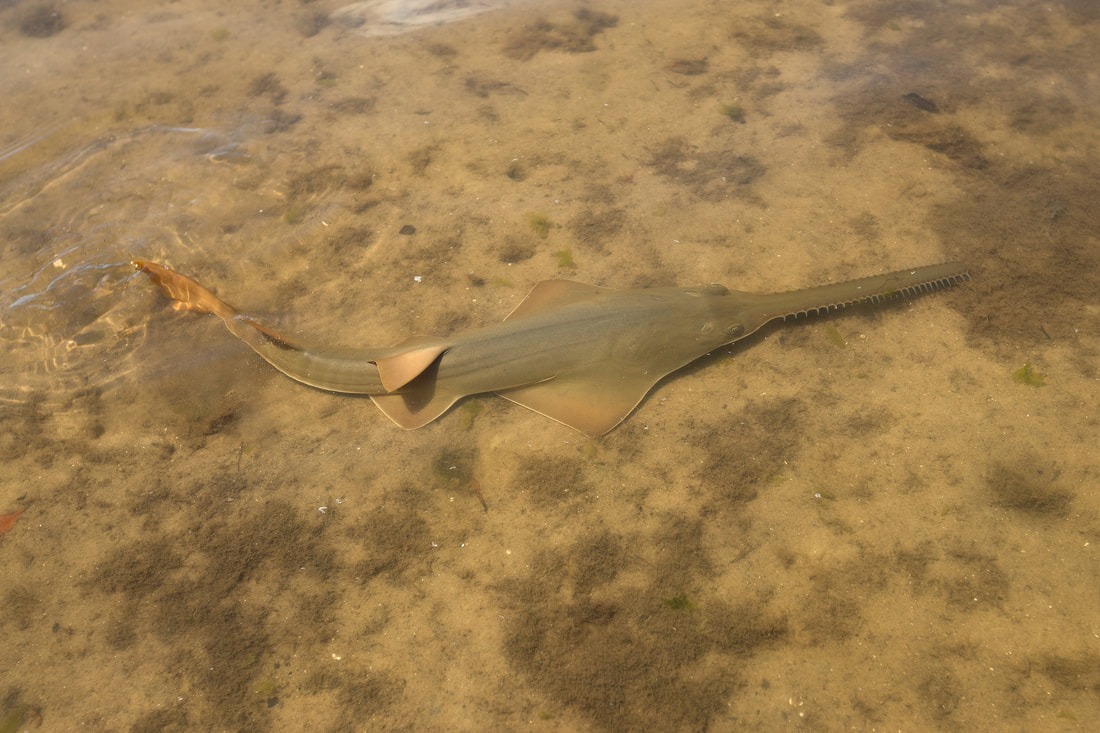
- Thematic assessment projects: Ghost Sharks (2018), Wedgefishes and Giant Guitarfishes (2018; see article below), wide-ranging pelagic species (2018), wide-ranging coastal species (2020), and wide-ranging deepwater species (2020).
While some recent projects such as the Arabian Sea and Adjacent Waters Region, and New Zealand, undertook regional level assessments, the focus on the Global Shark Trends Project is exactly as it appears in the title: “Global”. That is, Red List assessments are undertaken at the global level, evaluating extinction risk across the entire distribution of a species’ range. Regional assessment projects will evaluate endemic species, while thematic assessment projects will evaluate wider-ranging species. As an example, although both the Daggernose Shark (Isogomphodon oxyrhynchus) and the Blue Shark (Prionace glauca) occur off Brazil, the former is being assessed under the Atlantic South America assessment project as it is endemic to that region, and the latter is being assessed under the wide-ranging pelagic assessment project as it occurs not only off Brazil, but circumglobally in the Indian, Pacific, and Atlantic Oceans.Each assessment project consists of the following steps:
- Project team partners with Regional Vice-Chairs to engage with SSG members and other experts
- Data Collation (collation and synthesis of data/knowledge relevant to population trends of each species)
- Assessment Workshop
- Draft Assessment Preparation
- SSG Consultation (members are provided with table of draft assessments)
- Internal Assessment Review (each assessment is reviewed by 2 experts in the application of the IUCN Red List Categories and Criteria)
- Assessment Finalisation (following the IUCN Documentation Standards and Consistency Checks guidelines)
- Submission of species assessments to the IUCN Red List Unit
- Assessment Review by the IUCN Red List Unit
- Publication of species assessments on the Red List of Threatened Species
Given that Red List Criterion A (the ‘population decline’ criterion) is the most relevant to assessing extinction risk in most chondrichthyans, reassessing species will largely focus on data to support understanding population trends and the overlap between threats and species’ distribution. Assessments will focus on directly evaluating a species against the Categories and Criteria, rather than providing an in-depth summary of a species’ distribution, life history, threats, and conservation measures. This information forms an essential part of a species assessment, but only where it is relevant to extinction risk. The Global Shark Trends Project team will work with the relevant Regional Vice Chairs and members to prepare draft assessments with input from species and fisheries experts either during the workshops themselves, or outside of a workshop setting. As outlined in step 5 above, the project team will provide the SSG network with draft assessment categories for their consideration, as part of the consultation process. The assessment approach aims to marry the Red List training and experience of the Global Shark Trends Project team with the species and fisheries knowledge of the member network. Member’s contributions will be credited in assessments as relevant, and additional opportunities for publications are arising from many of our Red Listing activities. The task ahead is not trivial, but we have already been humbled by the remarkable contribution of the membership and other experts thus far.